As mentioned in a previous blog entry (See http://raffysaldana.blogspot.com/2007/08/notes-on-php-programming-part-i.html) I am now taking a short course on PHP Programming and MySQL Applications at the University of the Philippines Information Technology Training Center (UPITTC). During day 1 (August 12, 2007) we were given two exercises. Below are the exercises and my solutions.
PROBLEMS:
Exercise No. 1
a. Store your name, address, phone number, and e-mail address in variables with valid names.
b. Display the values of the variables in different lines.
(Optional: Use HTML tags to format your output (e.g., bold, italics, underline, etc.))
Exercise No. 2:
Create a simple PHP script that will determine whether two numbers are odd or even. If both numbers are even, display sum; if bot are odd, display their difference.
If either one is odd and the other is even, display their product.
MY SOLUTIONS:
To view my solutions to these exercises visit the following link:
http://www.freewebs.com/rpsaldana/phpmysql.htm
Cheers,
Raffy
(8/13/07, in Quezon City)
Monday, August 13, 2007


Sunday, August 12, 2007
Notes on PHP Programming, Part I.
 ( Photo Caption: The building where the UP Information Technology Training Center is located. Source: http://www.ittc.up.edu.ph/ )
 Last Sunday, August 12, 2007 I attended a short course on "PHP&MySQL" at the University of the Philippines Information Technology Center (UPITTC) in Diliman, Quezon City. This course will run for four Sundays. This is the training course that I wanted to attend last August 5, 2007, the day that I had a car accident at the C-5 flyover in Pasig City (see blog entry, http://raffysaldana.blogspot.com/2007/08/do-you-know-what-to-do-after-car.html). I came all the way from Bacoor, Cavite to U.P. Diliman that day just to find out that the first meeting was cancelled (postponed to August 12, 2007).
Here are some of my notes on the first day of the course:
============================
UPITTC
PhP&MySQL Web Applications
Day 1: August 12, 2007
============================
9:00 - 9:45 a.m. Introduction
Instructor: Regnard Kreisler C. Raquedan
Participants:
Here are some of my notes on the first day of the course:
============================
UPITTC
PhP&MySQL Web Applications
Day 1: August 12, 2007
============================
9:00 - 9:45 a.m. Introduction
Instructor: Regnard Kreisler C. Raquedan
Participants:
Karla, Shanel, Jay, Michael, Che, Dennis
Raffy, Francis, Jarvis, Nino, Janet, Weng, Alain, Gold
Jun, Melody, Richard, VJohn, Roland, Albert, Apple, Jason
10:00 a.m.
Notes: CRUD project (Create, Read, Update, Delete)
Course Requirements:
Class project
Written exam (probable)
(short but tricky exam)
No project, no certificate of completion
Course Prerequisites:
1. WWW
2. HTML
3. General Programming Concepts
4. Basic Knowledge of Databases
SQL: Structured Query Language
Course Schedule
Day 1. Introduction, Writing PhP Statements, Variables&Data
Day 2. Program Flow
Day 3. Web Application Basics
Day 4. Working with MySQL
Day 5. Presentation
Introduction
PHP: A Brief History
PHP: Personal Homepage, or Hypertext Preprocessor
(1995), a Perl/CGI script
Official Name: PHP (Page Hypertext Preprocessor)
(A recursive acronym)
Version 5 - 2004, current version
PHP is best summarized as an embedded server-side
Web-scripting language that provides developers with
the capability to quickly and efficiently build
dynamic Web applications.
Web-scripting language that provides developers with
the capability to quickly and efficiently build
dynamic Web applications.
Note: You can put PHP code anywhere in the code.
Client-Server architecture
Explain client-server relationship
Source: http://en.wikipedia.org/wiki/Client-server
"
Client-server
From Wikipedia, the free encyclopedia
Jump to: navigation, search
Client-server is computing architecture which
separates a client from a server, and is almost always
implemented over a computer network. Each client or
server connected to a network can also be referred to
as a node. The most basic type of client-server
architecture employs only two types of nodes: clients
and servers. This type of architecture is sometimes
referred to as two-tier. It allows devices to share
files and resources.
Source: http://en.wikipedia.org/wiki/Client-server
"
Client-server
From Wikipedia, the free encyclopedia
Jump to: navigation, search
Client-server is computing architecture which
separates a client from a server, and is almost always
implemented over a computer network. Each client or
server connected to a network can also be referred to
as a node. The most basic type of client-server
architecture employs only two types of nodes: clients
and servers. This type of architecture is sometimes
referred to as two-tier. It allows devices to share
files and resources.
Each instance of the client software can send data
requests to one or more connected servers. In turn,
the servers can accept these requests, process them,
and return the requested information to the client.
Although this concept can be applied for a variety of
reasons to many different kinds of applications, the
architecture remains fundamentally the same.
These days, clients are most often web browsers,
although that has not always been the case. Servers
typically include web servers, database servers and
mail servers.
"
Keyword: request
Situation: you opened a browser, and a pop-up window
opened
(something made a request, e.g. friendster,...
spyware, virus, etc.)
Summary:
client - user
browser - client-appl;ication
server - responds to your request
PHP bears a close resemblance to the C programming
language
client - user
browser - client-appl;ication
server - responds to your request
PHP bears a close resemblance to the C programming
language
Integrates features from a multitude of languages,
including Perl, Java and C++
including Perl, Java and C++
Extensive support is offered for graphic creation and
manipulation, mathematical calculations, and
E-commerce
manipulation, mathematical calculations, and
E-commerce
Question: Disadvantage
Why does PHP creates a disadvantage at times?
Answer: Maintenance problem 9developer tends to be
lazy, creates bad habits, hard for a programmer to
move into other modes of programming)
Advantages
Related technology: AJAX
Ajax
for web 2.0
http://en.wikipedia.org/wiki/Ajax_%28programming%29
This page pertains to AJAX used in programming
(Asynchronous Javascript And XML) to view other
possible meanings of AJAX, please visit Ajax
(disambiguation)
"
Ajax, or AJAX, is a web development technique used for
creating interactive web applications. The intent is
to make web pages feel more responsive by exchanging
small amounts of data with the server behind the
scenes, so that the entire web page does not have to
be reloaded each time the user requests a change. This
is intended to increase the web page's interactivity,
speed, functionality, and usability.
Why does PHP creates a disadvantage at times?
Answer: Maintenance problem 9developer tends to be
lazy, creates bad habits, hard for a programmer to
move into other modes of programming)
Advantages
Related technology: AJAX
Ajax
for web 2.0
http://en.wikipedia.org/wiki/Ajax_%28programming%29
This page pertains to AJAX used in programming
(Asynchronous Javascript And XML) to view other
possible meanings of AJAX, please visit Ajax
(disambiguation)
"
Ajax, or AJAX, is a web development technique used for
creating interactive web applications. The intent is
to make web pages feel more responsive by exchanging
small amounts of data with the server behind the
scenes, so that the entire web page does not have to
be reloaded each time the user requests a change. This
is intended to increase the web page's interactivity,
speed, functionality, and usability.
The name is shorthand for Asynchronous JavaScript and
XML. Ajax is asynchronous in that loading does not
interfere with normal page loading. JavaScript is the
programming language in which Ajax function calls are
made. Data retrieved using the technique is commonly
formatted using XML, as reflected in the naming of the
XMLHttpRequest object from which Ajax is derived.
Ajax is a cross-platform technique usable on many
different operating systems, computer architectures,
and Web browsers as it is based on open standards such
as JavaScript and XML, together with open source
implementations of other required technologies.
"
Old School: Websites were merely publsihing contents
Web 2.0: More about participation
Time Person of the Year : YOU (you as a contributore,
e.g. YouTube )
XML. Ajax is asynchronous in that loading does not
interfere with normal page loading. JavaScript is the
programming language in which Ajax function calls are
made. Data retrieved using the technique is commonly
formatted using XML, as reflected in the naming of the
XMLHttpRequest object from which Ajax is derived.
Ajax is a cross-platform technique usable on many
different operating systems, computer architectures,
and Web browsers as it is based on open standards such
as JavaScript and XML, together with open source
implementations of other required technologies.
"
Old School: Websites were merely publsihing contents
Web 2.0: More about participation
Time Person of the Year : YOU (you as a contributore,
e.g. YouTube )
Question: What is Open Source?
http://en.wikipedia.org/wiki/Open_source
"
Open source is a set of principles and practices that
promote access to the design and production of goods
and knowledge. The term is most commonly applied to
the source code of software that is available to the
general public with relaxed or non-existent
intellectual property restrictions. This allows users
to create software content through incremental
individual effort or through collaboration.
http://en.wikipedia.org/wiki/Open_source
"
Open source is a set of principles and practices that
promote access to the design and production of goods
and knowledge. The term is most commonly applied to
the source code of software that is available to the
general public with relaxed or non-existent
intellectual property restrictions. This allows users
to create software content through incremental
individual effort or through collaboration.
The open source model of operation can be extended to
open source culture in decision making, which allows
concurrent input of different agendas, approaches and
priorities, in contrast with more centralized models
of development such as those typically used in
commercial companies.[1] Open source culture is one
where collective decisions or fixations are shared
during development and made generally available in the
public domain, as done in Wikipedia. This collective
approach moderates ethical concerns over a "conflict
of roles" or conflict of interest. Participants in
such a culture are able to modify the collective
outcomes and share them with the community. Some
consider open source as one of various possible design
approaches, while others consider it a critical
strategic element of their operations.
Before the term open source became popular, developers
and producers used various phrases to describe the
concept; the term gained popularity with the rise of
the Internet which enabled diverse production models,
communication paths and interactive communities.[2]
Later, open source software became the most prominent
face of open source practices.
"
Source code is available ot the public under a certain
license agreement
open source culture in decision making, which allows
concurrent input of different agendas, approaches and
priorities, in contrast with more centralized models
of development such as those typically used in
commercial companies.[1] Open source culture is one
where collective decisions or fixations are shared
during development and made generally available in the
public domain, as done in Wikipedia. This collective
approach moderates ethical concerns over a "conflict
of roles" or conflict of interest. Participants in
such a culture are able to modify the collective
outcomes and share them with the community. Some
consider open source as one of various possible design
approaches, while others consider it a critical
strategic element of their operations.
Before the term open source became popular, developers
and producers used various phrases to describe the
concept; the term gained popularity with the rise of
the Internet which enabled diverse production models,
communication paths and interactive communities.[2]
Later, open source software became the most prominent
face of open source practices.
"
Source code is available ot the public under a certain
license agreement
PHP is open source
Apache and IIS are web servers
Blog: wordpress uses PHP, yahoo
What is an IP address: unique identifier for the
server on the net, IPV4, 32 bit
http://en.wikipedia.org/wiki/IP_address
An IP address (Internet Protocol address) is a unique
address that certain electronic devices use in order
to identify and communicate with each other on a
computer network utilizing the Internet Protocol
standard (IP)—in simpler terms, a computer address.
Any participating network device—including routers,
computers, time-servers, printers, Internet fax
machines, and some telephones—can have their own
unique address.
"
An IP address can also be thought of as the equivalent
of a street address or a phone number (compare: VoIP
(voice over (the) internet protocol)) for a computer
or other network device on the Internet. Just as each
street address and phone number uniquely identifies a
building or telephone, an IP address can uniquely
identify a specific computer or other network device
on a network. An IP address differs from other contact
information, however, because the linkage of a user's
IP address to his/her name is not publicly available
information.
Blog: wordpress uses PHP, yahoo
What is an IP address: unique identifier for the
server on the net, IPV4, 32 bit
http://en.wikipedia.org/wiki/IP_address
An IP address (Internet Protocol address) is a unique
address that certain electronic devices use in order
to identify and communicate with each other on a
computer network utilizing the Internet Protocol
standard (IP)—in simpler terms, a computer address.
Any participating network device—including routers,
computers, time-servers, printers, Internet fax
machines, and some telephones—can have their own
unique address.
"
An IP address can also be thought of as the equivalent
of a street address or a phone number (compare: VoIP
(voice over (the) internet protocol)) for a computer
or other network device on the Internet. Just as each
street address and phone number uniquely identifies a
building or telephone, an IP address can uniquely
identify a specific computer or other network device
on a network. An IP address differs from other contact
information, however, because the linkage of a user's
IP address to his/her name is not publicly available
information.
IP addresses can appear to be shared by multiple
client devices either because they are part of a
shared hosting web server environment or because a
network address translator (NAT) or proxy server acts
as an intermediary agent on behalf of its customers,
in which case the real originating IP addresses might
be hidden from the server receiving a request. A
common practice is to have a NAT hide a large number
of IP addresses, in the private address space defined
by RFC 1918, an address block that cannot be routed on
the public Internet. Only the "outside" interface(s)
of the NAT need to have Internet-routable addresses.
Most commonly, the NAT device maps TCP or UDP port
numbers on the outside to individual private addresses
on the inside. Just as there may be site-specific
extensions on a telephone number, the port numbers are
site-specific extensions to an IP address.
IP addresses are managed and created by the Internet
Assigned Numbers Authority (IANA). The IANA generally
allocates super-blocks to Regional Internet
Registries, who in turn allocate smaller blocks to
Internet service providers and enterprises.
"
PHP is free
PHP website: http://www.php.net/
http://www.php.net/license/
How PHP Works with the Web Server
* It all begins when a browser makes a request for a
Web page
* Based on the URL, the browser resolves the address
of the Web server, idnetifies the page it would like,
and gives any other informatio the Web server may
need.
You can work with Indows with PHP
".php" files should be placed in a particular folder
server: request
client: respond
they don't have to be in two distinct machines
Note: Even though you are not in a network, the IP
address assigned to your computer will still work
(deafult setting)
127.0.0.1 (Home IP address)
Domain Names - associated with IP address
path
C:\Program Files\xampp\htdocs
http://localhost/xampp/index.php
WRITING PHP STATEMENTS
Simple Statements
One line statemens
Ends with semicolon (;)
Example:
Echo ("Hello World!");
client devices either because they are part of a
shared hosting web server environment or because a
network address translator (NAT) or proxy server acts
as an intermediary agent on behalf of its customers,
in which case the real originating IP addresses might
be hidden from the server receiving a request. A
common practice is to have a NAT hide a large number
of IP addresses, in the private address space defined
by RFC 1918, an address block that cannot be routed on
the public Internet. Only the "outside" interface(s)
of the NAT need to have Internet-routable addresses.
Most commonly, the NAT device maps TCP or UDP port
numbers on the outside to individual private addresses
on the inside. Just as there may be site-specific
extensions on a telephone number, the port numbers are
site-specific extensions to an IP address.
IP addresses are managed and created by the Internet
Assigned Numbers Authority (IANA). The IANA generally
allocates super-blocks to Regional Internet
Registries, who in turn allocate smaller blocks to
Internet service providers and enterprises.
"
PHP is free
PHP website: http://www.php.net/
http://www.php.net/license/
How PHP Works with the Web Server
* It all begins when a browser makes a request for a
Web page
* Based on the URL, the browser resolves the address
of the Web server, idnetifies the page it would like,
and gives any other informatio the Web server may
need.
You can work with Indows with PHP
".php" files should be placed in a particular folder
server: request
client: respond
they don't have to be in two distinct machines
Note: Even though you are not in a network, the IP
address assigned to your computer will still work
(deafult setting)
127.0.0.1 (Home IP address)
Domain Names - associated with IP address
path
C:\Program Files\xampp\htdocs
http://localhost/xampp/index.php
WRITING PHP STATEMENTS
Simple Statements
One line statemens
Ends with semicolon (;)
Example:
Echo ("Hello World!");
More on World Heritage Sites

In a previous blog entry (See http://raffysaldana.blogspot.com/2007/08/world-heritage-sites.html) I mentioned that the Philippines has five sites in the UNESCO World Heritage Sites.
According the UNESCO website ( See http://whc.unesco.org/en/list) the World Heritage List includes 851 properties forming part of the cultural and natural heritage which the World Heritage Committee considers as having outstanding universal value. These include 660 cultural, 166 natural and 25 mixed properties in 141 States Parties. As of October 2006, 184 States Parties have ratified the World Heritage Convention.
To be included in the World Heritage List, sites must be of outstanding universal value and meet at least one out of ten selection criteria. These criteria are explained in the Operational Guidelines for the Implementation of the World Heritage Convention which, besides the text of the Convention, is the main working tool on World Heritage. The criteria are regularly revised by the Committee to reflect the evolution of the World Heritage concept itself.
Selection criteria: (Source: http://whc.unesco.org/en/criteria/ )
Australia
1. Greater Blue Mountains Area (2000)
2. Royal Exhibition Building and Carlton Gardens (2004)
3. Sydney Opera House (2007)
Austria
4. Palace and Gardens of Schönbrunn (1996)
5. Historic Centre of Vienna (2001)
China
6. Imperial Palaces of the Ming and Qing Dynasties in Beijing and Shenyang (1987, 2004)
7. The Great Wall (1987)
8. Summer Palace, an Imperial Garden in Beijing (1998)
9. Temple of Heaven: an Imperial Sacrificial Altar in Beijing (1998)
10. Historic Centre of Macao (2005)
Denmark
11. Kronborg Castle (2000)
Egypt
12. Historic Cairo (1979)
13. Memphis and its Necropolis – the Pyramid Fields from Giza to Dahshur (1979)
France
14. Cathedral of Notre-Dame, Former Abbey of Saint-Remi and Palace of Tau, Reims (1991)
15. Paris, Banks of the Seine (1991)
Germany
16. Palaces and Parks of Potsdam and Berlin (1990, 1992, 1999)
Greece
17. Acropolis, Athens (1987)
Holy See
18. Historic Centre of Rome, the Properties of the Holy See in that City Enjoying Extraterritorial Rights and San Paolo Fuori le Mura (1980, 1990) * 11
19. Vatican City (1984)
Israel
20. White City of Tel-Aviv -- the Modern Movement (2003)
Italy
21. Historic Centre of Florence (1982)
22. Venice and its Lagoon (1987)
Japan
23. Shrines and Temples of Nikko (1999)
Jerusalem (Site proposed by Jordan)
24. Old City of Jerusalem and its Walls (1981)
Philippines
25. Baroque Churches of the Philippines (1993)
26. Rice Terraces of the Philippine Cordilleras (1995)
27. Historic Town of Vigan (1999)
28. Puerto-Princesa Subterranean River National Park (1999)
Portugal
29. Cultural Landscape of Sintra (1995)
30. Historic Centre of Oporto (1996)
Spain
31. Burgos Cathedral (1984)
32. Monastery and Site of the Escurial, Madrid (1984)
33. Works of Antoni Gaudí (1984, 2005) 23
34. Old Town of Ávila with its Extra-Muros Churches (1985)
35. Santiago de Compostela (Old Town) (1985)
36. Historic City of Toledo (1986)
37. Route of Santiago de Compostela (1993)
Switzerland
38. Old City of Berne (1983)
39. Jungfrau-Aletsch-Bietschhorn (2001, 2007)
United States of America
40. Grand Canyon National Park (1979)
41. Statue of Liberty (1984)
Note: I have been to Canada, New Zealand, Netherlands, Indonesia, Malaysia, and Thailand but I have not visited any of their World Heritage sites. The next time I will visit these countries, I will make a point to visit at least one of their sites listed in the UNESCO World Heritage Sites.
Cheers,
Raffy
(8/13/07, in Quezon City)
According the UNESCO website ( See http://whc.unesco.org/en/list) the World Heritage List includes 851 properties forming part of the cultural and natural heritage which the World Heritage Committee considers as having outstanding universal value. These include 660 cultural, 166 natural and 25 mixed properties in 141 States Parties. As of October 2006, 184 States Parties have ratified the World Heritage Convention.
To be included in the World Heritage List, sites must be of outstanding universal value and meet at least one out of ten selection criteria. These criteria are explained in the Operational Guidelines for the Implementation of the World Heritage Convention which, besides the text of the Convention, is the main working tool on World Heritage. The criteria are regularly revised by the Committee to reflect the evolution of the World Heritage concept itself.
Selection criteria: (Source: http://whc.unesco.org/en/criteria/ )
"
1. to represent a masterpiece of human creative genius;
2. to exhibit an important interchange of human values, over a span of time or within a cultural area of the world, on developments in architecture or technology, monumental arts, town-planning or landscape design;
3. to bear a unique or at least exceptional testimony to a cultural tradition or to a civilization which is living or which has disappeared;
4. to be an outstanding example of a type of building, architectural or technological ensemble or landscape which illustrates (a) significant stage(s) in human history;
5. to be an outstanding example of a traditional human settlement, land-use, or sea-use which is representative of a culture (or cultures), or human interaction with the environment especially when it has become vulnerable under the impact of irreversible change;
6. to be directly or tangibly associated with events or living traditions, with ideas, or with beliefs, with artistic and literary works of outstanding universal significance. (The Committee considers that this criterion should preferably be used in conjunction with other criteria);
7. to contain superlative natural phenomena or areas of exceptional natural beauty and aesthetic importance;
8. to be outstanding examples representing major stages of earth's history, including the record of life, significant on-going geological processes in the development of landforms, or significant geomorphic or physiographic features;
9. to be outstanding examples representing significant on-going ecological and biological processes in the evolution and development of terrestrial, fresh water, coastal and marine ecosystems and communities of plants and animals;
10. to contain the most important and significant natural habitats for in-situ conservation of biological diversity, including those containing threatened species of outstanding universal value from the point of view of science or conservation.
The protection, management, authenticity and integrity of properties are also important considerations. "
The complete list of World Heritage Sites is found in this website:
http://whc.unesco.org/en/list/
Looking at the list, I realized that out of the out of the 851 sites listed, I have already visited 41 sites [still a long way to go, but it is already something :) ]. Below is a list of the sites that I have been to/visited (Note: The numbers in parenthesis is the year of inscription of the site as a World Heritage site and NOT the year that I have visited it):
WORLD HERITAGE SITES THAT I HAVE VISITED (as of August 2007)Australia
1. Greater Blue Mountains Area (2000)
2. Royal Exhibition Building and Carlton Gardens (2004)
3. Sydney Opera House (2007)
Austria
4. Palace and Gardens of Schönbrunn (1996)
5. Historic Centre of Vienna (2001)
China
6. Imperial Palaces of the Ming and Qing Dynasties in Beijing and Shenyang (1987, 2004)
7. The Great Wall (1987)
8. Summer Palace, an Imperial Garden in Beijing (1998)
9. Temple of Heaven: an Imperial Sacrificial Altar in Beijing (1998)
10. Historic Centre of Macao (2005)
Denmark
11. Kronborg Castle (2000)
Egypt
12. Historic Cairo (1979)
13. Memphis and its Necropolis – the Pyramid Fields from Giza to Dahshur (1979)
France
14. Cathedral of Notre-Dame, Former Abbey of Saint-Remi and Palace of Tau, Reims (1991)
15. Paris, Banks of the Seine (1991)
Germany
16. Palaces and Parks of Potsdam and Berlin (1990, 1992, 1999)
Greece
17. Acropolis, Athens (1987)
Holy See
18. Historic Centre of Rome, the Properties of the Holy See in that City Enjoying Extraterritorial Rights and San Paolo Fuori le Mura (1980, 1990) * 11
19. Vatican City (1984)
Israel
20. White City of Tel-Aviv -- the Modern Movement (2003)
Italy
21. Historic Centre of Florence (1982)
22. Venice and its Lagoon (1987)
Japan
23. Shrines and Temples of Nikko (1999)
Jerusalem (Site proposed by Jordan)
24. Old City of Jerusalem and its Walls (1981)
Philippines
25. Baroque Churches of the Philippines (1993)
26. Rice Terraces of the Philippine Cordilleras (1995)
27. Historic Town of Vigan (1999)
28. Puerto-Princesa Subterranean River National Park (1999)
Portugal
29. Cultural Landscape of Sintra (1995)
30. Historic Centre of Oporto (1996)
Spain
31. Burgos Cathedral (1984)
32. Monastery and Site of the Escurial, Madrid (1984)
33. Works of Antoni Gaudí (1984, 2005) 23
34. Old Town of Ávila with its Extra-Muros Churches (1985)
35. Santiago de Compostela (Old Town) (1985)
36. Historic City of Toledo (1986)
37. Route of Santiago de Compostela (1993)
Switzerland
38. Old City of Berne (1983)
39. Jungfrau-Aletsch-Bietschhorn (2001, 2007)
United States of America
40. Grand Canyon National Park (1979)
41. Statue of Liberty (1984)
Note: I have been to Canada, New Zealand, Netherlands, Indonesia, Malaysia, and Thailand but I have not visited any of their World Heritage sites. The next time I will visit these countries, I will make a point to visit at least one of their sites listed in the UNESCO World Heritage Sites.
Cheers,
Raffy
(8/13/07, in Quezon City)
Car Accident Photos


 Last August 5, 2007, I had a car accident at the C-5 fly-over in Pasig City (See blog entry, http://raffysaldana.blogspot.com/2007/08/do-you-know-what-to-do-after-car.html). Here are the photos of my Honda City Car (model 2006) showing the damaged portion.
 Raffy
(8/13/07, in Quezon City)
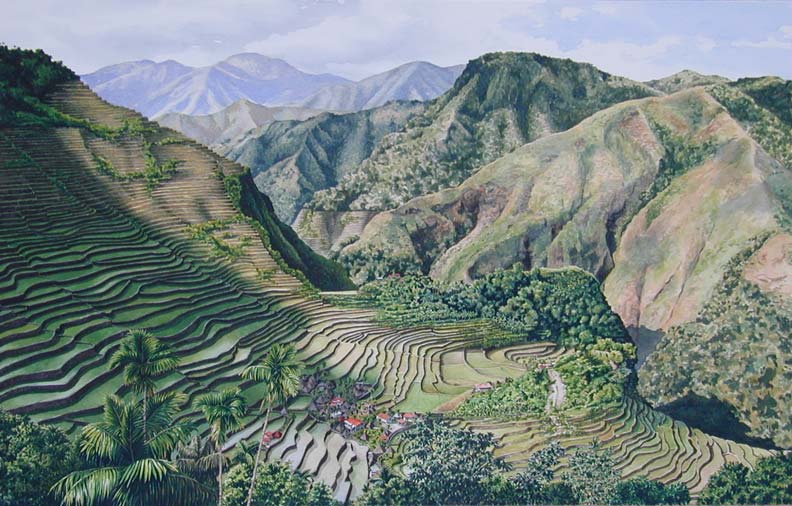
World Heritage Sites

(Photo Caption: The Ifugao Rice Terraces in Batad, Philippines. Source: http://www.travel-philippines.com/locations/central-luzon/2-batad.htm )
I have been writing about the subject of car accidents for one week already. I think I have already recovered from my "post accident anxiety". A colleague of mine who is a psychologist actually advised me to write something about my car accident experience in my BLOG. She said it would help me (psychologically).
I believe that it is now time for me to change topics.
Last Saturday (8/11/07) I saw a film feature (what others call an independent film) about the Ifugao rice terraces in Batad, Mountain Province (in northern Philippines). I learned from the film that the Ifugao rice terraces is listed as one of the World Heritage Sites.
What is a World Heritage Site?
A quick look at Wikipedia ( http://www.wikipedia.org/ ) gave this answer:
World Heritage Site
From Wikipedia, the free encyclopedia
( Source: http://en.wikipedia.org/wiki/World_Heritage_Site )
"A UNESCO World Heritage Site is a specific site (such as a forest, mountain, lake, desert, monument, building, complex, or city) that has been nominated and confirmed for inclusion on the list maintained by the international World Heritage Programme administered by the UNESCO World Heritage Committee, composed of 21 State Parties (countries) which are elected by the General Assembly of States Parties for a fixed term.[1] (This is similar to the United Nations Security Council.)
The programme aims to catalogue, name, and conserve sites of outstanding cultural or natural importance to the common heritage of mankind. Under certain conditions, listed sites can obtain funds from the World Heritage Fund. The programme was founded with the Convention Concerning the Protection of World Cultural and Natural Heritage, which was adopted by the General Conference of UNESCO on 16 November 1972. Since then, 184 (as of July 2007) States Parties have ratified the convention.
As of 2007, a total of 851 sites are listed: 660 cultural, 166 natural, and 25 mixed properties, in 142 States Parties. UNESCO references each World Heritage Site with a unique identification number; but new inscriptions often include previous sites now listed as part of larger descriptions. As a result, the numbering system currently ends above 1200, even though there are fewer on the actual list.
Each World Heritage Site is the property of the country on whose territory the site is located, but it is considered in the interest of the international community to preserve each site for future generations of humanity. The protection and conservation of these sites are a concern of all the World Heritage countries."
Currently, there are five World Heritage Sites listed under the Philippines. These are:
(See http://whc.unesco.org/pg.cfm?cid=31 )
1. Baroque Churches of the Philippines (1993)
2. Tubbataha Reef Marine Park (1993)
3. Rice Terraces of the Philippine Cordilleras (1995)
4. Historic Town of Vigan (1999)
5. Puerto-Princesa Subterranean River National Park (1999)
I realized that I have visited four out of five sites fom this list. The only site that I have not visited (from the Philippine list) is the Tubbataha Reef Marine Park.
Well, I hope to visit this marine park someday :)
Cheers,
Raffy(8/13/07, in Quezon City)
P.S. Below are some links to the Ifugao Rice Terraces in Batad, Philippines:
http://www.travel-philippines.com/locations/central-luzon/2-batad.htm
http://www.aenet.org/ifugao/batad.htm
One Week After My Car Accident: Rubbing Salt to Injury
It has been one week already since I had a car accident (See blog entry, http://raffysaldana.blogspot.com/2007/08/do-you-know-what-to-do-after-car.html ). And my car has not yet been repaired!
A representative of the car insurance company (not mine, but that of the Volvo car that hit my Honda City car) has inspected the damage to my car but that insurance company has not yet informed me about the result of the inspection. Meanwhile, I brought my car to Honda Cars Pasig last Saturday (8/11/07) to get an estimate of the cost of repair. I was told that the cost estimate(parts and labor)is about twenty six thousand pesos (PhP 26,000.00). I was also told that Honda Cars Pasig would need one week to repair my car.
Last week, I also got a text message from the owner of the Volvo car that hit my car. He told me that "his car had no damage whatsoever." Isn't this a case of "rubbing salt to injury"???
The moral of the story is: "If you are a car driver, be careful (that your car would) not to be hit by a Volvo. Otherwise, you would be sorry!!!"
Raffy
(8/13/07, in Quezon City)
A representative of the car insurance company (not mine, but that of the Volvo car that hit my Honda City car) has inspected the damage to my car but that insurance company has not yet informed me about the result of the inspection. Meanwhile, I brought my car to Honda Cars Pasig last Saturday (8/11/07) to get an estimate of the cost of repair. I was told that the cost estimate(parts and labor)is about twenty six thousand pesos (PhP 26,000.00). I was also told that Honda Cars Pasig would need one week to repair my car.
Last week, I also got a text message from the owner of the Volvo car that hit my car. He told me that "his car had no damage whatsoever." Isn't this a case of "rubbing salt to injury"???
The moral of the story is: "If you are a car driver, be careful (that your car would) not to be hit by a Volvo. Otherwise, you would be sorry!!!"
Raffy
(8/13/07, in Quezon City)
Tuesday, August 7, 2007
Car Accident Insurance: Procedure in Filing a Claim
Still on the subject of car accidents (See my blog post, http://raffysaldana.blogspot.com/2007/08/do-you-know-what-to-do-after-car.html ), last Monday (8/6/07) the car insurance company of the Volvo car that hit my Honda City car last Sunday (8/5/07) contacted and informed me that a company representative will conduct an inspection of the damage to my car. Yesterday (8/7/07) a representative of the insurance company went to my place and inspected my car.
As a car owner (and a driver) one should know how to file claims from a car insurance company. Below is the procedure in filing a claim ( Source: http://www.standard-insurance.com/claims_servicing.shtml ) (Note: The procedure may vary, depending on the car insurance company):
Procedure in filing a claim
Filing Motor Car Claim
· General Requirements
1. Complete photocopy of the face of the Policy Contract and Policy Schedule
2. Photocopy of the Official Receipt (OR) of premium payment
3. Photocopy of Endorsement (if any)
4. Photocopy of Car Registration and Motor Vehicle Registration Receipt
5. Photocopy of Driver's License and OR
6. Police Report
7. Affidavit of the driver (if the circumstances are not clear in the police report)
· Additional Requirements
1. For Total Loss
a. Purchase Invoice/ Delivery Receipt
b. Outstanding balance from the bank (if mortgaged)
2. For Carnap
a. Complaint Sheet
b. Alarm Sheet
c. Original Keys
d. Purchase Invoice/ Delivery Receipt
3. For Third Party Property Damage
a. Insurance Policy of the Third Party
b. Car Registration and Official Receipt of the Third Party
c. Driver's License and Official Receipt of the Third Party
d. Certificate of No Claim from Third Party Insurer
e. Stencil of Motor and Chassis Number of Insured and Third Party vehicles
f. Colored pictures (if available)
g. Estimates (if available)
4. For Third Party Other Than Vehicle
a. Colored pictures of the damaged property
b. Estimated cost of repairs of the damaged property
c. Proof of ownership
d. Stencil of Motor and Chassis Number of insured vehicle
5. For Third Party Bodily Injury
a. Medical Certificate
b. Receipts of Medicine
c. Hospital Bills
d. Birth Certificate (if minor)
e. Stencil of Motor and Chassis Number of Insured Vehicle
6. For Third Party Death
a. Death Certificate
b. Funeral Receipts
c. Marriage Contract (if married)
d. Birth Certificate (if minor or single)
e. Stencil of Motor and Chassis Number of Insured Vehicle
· Procedure
1. Report to the nearest police station for investigation and secure a copy of the police investigation report.
2. SUBMIT ALL THE REQUIRED DOCUMENTS either to the branch, agency or car dealer where you acquired your insurance.
3. The outlet where you filed your documents shall assign your claim to the Company's Technical Department for the inspection of the unit to determine the fair extent of damage sustained.
4. PLEASE COMPLY WITH THE ASSIGNED SCHEDULE FOR INSPECTION TO AVOID DELAY.
5. The outlet where you filed your claim will inform you of the approved amount of claim and the amount of your participation in betterments. This will be done either by:
* Letter of Authority (LOA) addressed to the shop which will undertake the repair, or
* Cash Settlement
Important Reminders
1. Never have your unit repaired without approval of the Company's Claims Division. This is a ground for denial of claim.
2. In case insured unit is disabled, assured is required to make arrangements for safekeeping of the insured unit, as stated in your policy.
3. We strongly suggest that the photocopies of the first five general requirements be readily available (preferably inside the glove compartment of your car).
4. Make sure that you and your driver is in possession of a valid Driver's License with the applicabale restriction code stated therein.
As a car owner (and a driver) one should know how to file claims from a car insurance company. Below is the procedure in filing a claim ( Source: http://www.standard-insurance.com/claims_servicing.shtml ) (Note: The procedure may vary, depending on the car insurance company):
Procedure in filing a claim
Filing Motor Car Claim
· General Requirements
1. Complete photocopy of the face of the Policy Contract and Policy Schedule
2. Photocopy of the Official Receipt (OR) of premium payment
3. Photocopy of Endorsement (if any)
4. Photocopy of Car Registration and Motor Vehicle Registration Receipt
5. Photocopy of Driver's License and OR
6. Police Report
7. Affidavit of the driver (if the circumstances are not clear in the police report)
· Additional Requirements
1. For Total Loss
a. Purchase Invoice/ Delivery Receipt
b. Outstanding balance from the bank (if mortgaged)
2. For Carnap
a. Complaint Sheet
b. Alarm Sheet
c. Original Keys
d. Purchase Invoice/ Delivery Receipt
3. For Third Party Property Damage
a. Insurance Policy of the Third Party
b. Car Registration and Official Receipt of the Third Party
c. Driver's License and Official Receipt of the Third Party
d. Certificate of No Claim from Third Party Insurer
e. Stencil of Motor and Chassis Number of Insured and Third Party vehicles
f. Colored pictures (if available)
g. Estimates (if available)
4. For Third Party Other Than Vehicle
a. Colored pictures of the damaged property
b. Estimated cost of repairs of the damaged property
c. Proof of ownership
d. Stencil of Motor and Chassis Number of insured vehicle
5. For Third Party Bodily Injury
a. Medical Certificate
b. Receipts of Medicine
c. Hospital Bills
d. Birth Certificate (if minor)
e. Stencil of Motor and Chassis Number of Insured Vehicle
6. For Third Party Death
a. Death Certificate
b. Funeral Receipts
c. Marriage Contract (if married)
d. Birth Certificate (if minor or single)
e. Stencil of Motor and Chassis Number of Insured Vehicle
· Procedure
1. Report to the nearest police station for investigation and secure a copy of the police investigation report.
2. SUBMIT ALL THE REQUIRED DOCUMENTS either to the branch, agency or car dealer where you acquired your insurance.
3. The outlet where you filed your documents shall assign your claim to the Company's Technical Department for the inspection of the unit to determine the fair extent of damage sustained.
4. PLEASE COMPLY WITH THE ASSIGNED SCHEDULE FOR INSPECTION TO AVOID DELAY.
5. The outlet where you filed your claim will inform you of the approved amount of claim and the amount of your participation in betterments. This will be done either by:
* Letter of Authority (LOA) addressed to the shop which will undertake the repair, or
* Cash Settlement
Important Reminders
1. Never have your unit repaired without approval of the Company's Claims Division. This is a ground for denial of claim.
2. In case insured unit is disabled, assured is required to make arrangements for safekeeping of the insured unit, as stated in your policy.
3. We strongly suggest that the photocopies of the first five general requirements be readily available (preferably inside the glove compartment of your car).
4. Make sure that you and your driver is in possession of a valid Driver's License with the applicabale restriction code stated therein.
What applies to me is procedure number 3, i.e., "Third Property Damage." In addition to the requirements stated above, I have to submit a "NO CLAIM" form from my car insurance company to the insurance company of the Volvo car that hit my car. Also, in this case, a driver's affidavit (from the other party) will take the place of a police investigation report.
It has been two days since I had car accident. My work and schedules have been affected. Also, I have to deal with post-accident anxiety and the fact that my (relatively) new car has been damaged! This is frustrating but I have to deal with this reality.
Raffy (8/8/07 in Quezon City)
Monday, August 6, 2007
Car Accidents in Metro Manila Are Common

While looking for articles related to car accidents (I just had a car accident recently, see http://raffysaldana.blogspot.com/2007/08/do-you-know-what-to-do-after-car.html ) I saw some statistics on car crashes in the U.S. (I wish I could find some statistics on car accidents in the Philippines):
Did you know that....
" Car Crash Stats: There were nearly 6,420,000 auto accidents in the United States in 2005. The financial cost of these crashes is more than 230 Billion dollars. 2.9 million people were injured and 42,636 people killed. About 115 people die every day in vehicle crashes in the United States -- one death every 13 minutes."
Source: http://www.car-accidents.com/pages/stats.html
Just this morning (8/7/07) three car accidents were reported on the TV news: (1) a motorcycle hit a car, (2) the driver of a taxi cab had a heart attack and died, and the car hit several objects nearby, and (3) a Honda CRV turned turtle at the Commonwealth flyover due to slippery weather condition.
So the next time you drive, be careful and be prepared.
Raffy
8/07/07
Quezon City
Did you know that....
" Car Crash Stats: There were nearly 6,420,000 auto accidents in the United States in 2005. The financial cost of these crashes is more than 230 Billion dollars. 2.9 million people were injured and 42,636 people killed. About 115 people die every day in vehicle crashes in the United States -- one death every 13 minutes."
Source: http://www.car-accidents.com/pages/stats.html
Just this morning (8/7/07) three car accidents were reported on the TV news: (1) a motorcycle hit a car, (2) the driver of a taxi cab had a heart attack and died, and the car hit several objects nearby, and (3) a Honda CRV turned turtle at the Commonwealth flyover due to slippery weather condition.
So the next time you drive, be careful and be prepared.
Raffy
8/07/07
Quezon City
Driving in Metro Manila
Below are the contents of a website I found on the Internet while searching for information about what to do in case of car accidents. I just experienced a car accident last Sunday, 5 August 2007 (See http://raffysaldana.blogspot.com/2007/08/do-you-know-what-to-do-after-car.html ) so the current theme of my blog now is about car accidents:
MANILA ROAD TRAVEL INFORMATION
Source: http://www.cityguide.travel-guides.com/city/75/road/South-East-Asia/Manila.html
"Driving in Manila is not for the faint-hearted, as there is a fairly opportunistic attitude.
In theory, the Filipinos drive on the right and the legal driving age is 18 years. The national roads (expressways), smaller main roads (highways) and smaller streets or alternate roads are all signposted in English. The national speed limit on expressways is 80kph (50mph), falling to 40kph (25mph) in built-up areas of central Manila.
There are drink-driving laws but these are not strictly adhered to. The maximum legal alcohol to blood ratio is 0.10%, approximately equivalent to six bottles of beer. If stopped by the police while driving under the influence of alcohol, you will be fined or will have to spend three to six days in jail and will have to attend an obligatory seminar on the dangers of drink driving.
The general rule is that drivers give way to buses at all times. The safest lane is the outside lane, although drivers will overtake on the inside or on the hard shoulder if there is a gap in the traffic.
Care should be taken when driving at night, especially as many cyclists and even truck drivers may not use lights. Accidents are marked by burning oilcans placed in the road.
Foreign and international driving licences are valid for 90 days from arrival in the country but it is unlikely that one will be asked for your licence once the vehicle is hired. No other documentation is needed apart from your passport.
The Automobile Association Philippines (formerly known as the Philippine Motor Association) 683 Aurora Boulevard, Quezon City (tel: (02) 723 0808 or 726 0191), operates a 24-hour emergency breakdown and towing service within Metro Manila. This is free to members. "
Disclaimer: I did not write the quoted article above, so the opinions expressed in the article are not mine.
Raffy
8/7/07, Quezon City
MANILA ROAD TRAVEL INFORMATION
Source: http://www.cityguide.travel-guides.com/city/75/road/South-East-Asia/Manila.html
"Driving in Manila is not for the faint-hearted, as there is a fairly opportunistic attitude.
In theory, the Filipinos drive on the right and the legal driving age is 18 years. The national roads (expressways), smaller main roads (highways) and smaller streets or alternate roads are all signposted in English. The national speed limit on expressways is 80kph (50mph), falling to 40kph (25mph) in built-up areas of central Manila.
There are drink-driving laws but these are not strictly adhered to. The maximum legal alcohol to blood ratio is 0.10%, approximately equivalent to six bottles of beer. If stopped by the police while driving under the influence of alcohol, you will be fined or will have to spend three to six days in jail and will have to attend an obligatory seminar on the dangers of drink driving.
The general rule is that drivers give way to buses at all times. The safest lane is the outside lane, although drivers will overtake on the inside or on the hard shoulder if there is a gap in the traffic.
Care should be taken when driving at night, especially as many cyclists and even truck drivers may not use lights. Accidents are marked by burning oilcans placed in the road.
Foreign and international driving licences are valid for 90 days from arrival in the country but it is unlikely that one will be asked for your licence once the vehicle is hired. No other documentation is needed apart from your passport.
The Automobile Association Philippines (formerly known as the Philippine Motor Association) 683 Aurora Boulevard, Quezon City (tel: (02) 723 0808 or 726 0191), operates a 24-hour emergency breakdown and towing service within Metro Manila. This is free to members. "
Disclaimer: I did not write the quoted article above, so the opinions expressed in the article are not mine.
Raffy
8/7/07, Quezon City
It's Better to be Safe than Sorry
Because of the car accident that I experienced last Sunday (See http://raffysaldana.blogspot.com/2007/08/do-you-know-what-to-do-after-car.html ) the dominant theme of my blog for the moment is about car accidents.
While looking for information about car accidents on the Internet I found one relevant site. Although the information contained in the site geared towards American readers, the site I think is also relevant to Philippine situation (except for the emergency number).
CAR ACCIDENT KNOWLEDGE
Source: http://www.atg.wa.gov/teenconsumer/transportation/car_accident_knowledge.htm
"At some point in your life, you will probably be involved in a car accident. It may simply be a bump in the parking lot, or you could end up in a more serious accident where people are injured. In any case, knowing how to react to a car accident will improve the outcome for everyone involved.
You may be wondering, "Why do I need to know what to do if I'm in a car accident?" If you do not follow the proper procedure, your insurance company could refuse to pay your claim. In addition, you could face fines if you do not follow legal procedures.
Being aware of the steps to follow will help you when you file police reports and when you file for insurance compensation.As a precautionary measure, keep first aid supplies and an emergency kit in your car. Flares, a bright orange vest, a cell phone, and a disposable camera are all helpful objects to have in case of an accident.
If you are in a moving vehicle when an accident occurs, immediately and safely pull over to the side of the road, turn off your car, and turn on your hazard lights. Check to see if anyone is hurt. If there is an injured person, do not move them until you take standard first aid measures. Place flares, cones, or triangles alongside the road a few hundred feet before the accident so traffic is aware that there is an accident ahead.
Call 911 and inform them of any injuries. If you are on a freeway and do not have access to a cell phone or telephone, check for a roadside phone that you can use.
Trade information with everyone involved in the accident. Be sure to exchange the following:
• Name, address, phone numbers of all drivers
• Name, address, phone number of all passengers or witnesses
• Driver's license numbers and license plate numbers
•Insurance companies of all drivers involved
• Registered owners of all cars
•Year, model, make, etc. of all cars involved.
Do not discuss what happened with anyone else but the police. Do not say that it was your fault, and do not make accusations. These comments may be used against you later.
If time and accident conditions allow, take notes about your perception of what happened. Immediately report the accident to your insurance company, and to the police if there is over $500 in damages (in Washington state-check with your state laws for the dollar amount in your state). You may find that the other driver has filed a report stating that the accident was your fault.
If you have or suspect an injury, visit a doctor right away. Following these simple steps will keep the accident scene as safe as possible, and will help to ensure that no one has to bear unnecessary blame.
The next time you are involved in an accident, whether it be a fender-bender or a rollover, don't panic. Now you know the proper procedure for dealing with this type of situation."
While looking for information about car accidents on the Internet I found one relevant site. Although the information contained in the site geared towards American readers, the site I think is also relevant to Philippine situation (except for the emergency number).
CAR ACCIDENT KNOWLEDGE
Source: http://www.atg.wa.gov/teenconsumer/transportation/car_accident_knowledge.htm
"At some point in your life, you will probably be involved in a car accident. It may simply be a bump in the parking lot, or you could end up in a more serious accident where people are injured. In any case, knowing how to react to a car accident will improve the outcome for everyone involved.
You may be wondering, "Why do I need to know what to do if I'm in a car accident?" If you do not follow the proper procedure, your insurance company could refuse to pay your claim. In addition, you could face fines if you do not follow legal procedures.
Being aware of the steps to follow will help you when you file police reports and when you file for insurance compensation.As a precautionary measure, keep first aid supplies and an emergency kit in your car. Flares, a bright orange vest, a cell phone, and a disposable camera are all helpful objects to have in case of an accident.
If you are in a moving vehicle when an accident occurs, immediately and safely pull over to the side of the road, turn off your car, and turn on your hazard lights. Check to see if anyone is hurt. If there is an injured person, do not move them until you take standard first aid measures. Place flares, cones, or triangles alongside the road a few hundred feet before the accident so traffic is aware that there is an accident ahead.
Call 911 and inform them of any injuries. If you are on a freeway and do not have access to a cell phone or telephone, check for a roadside phone that you can use.
Trade information with everyone involved in the accident. Be sure to exchange the following:
• Name, address, phone numbers of all drivers
• Name, address, phone number of all passengers or witnesses
• Driver's license numbers and license plate numbers
•Insurance companies of all drivers involved
• Registered owners of all cars
•Year, model, make, etc. of all cars involved.
Do not discuss what happened with anyone else but the police. Do not say that it was your fault, and do not make accusations. These comments may be used against you later.
If time and accident conditions allow, take notes about your perception of what happened. Immediately report the accident to your insurance company, and to the police if there is over $500 in damages (in Washington state-check with your state laws for the dollar amount in your state). You may find that the other driver has filed a report stating that the accident was your fault.
If you have or suspect an injury, visit a doctor right away. Following these simple steps will keep the accident scene as safe as possible, and will help to ensure that no one has to bear unnecessary blame.
The next time you are involved in an accident, whether it be a fender-bender or a rollover, don't panic. Now you know the proper procedure for dealing with this type of situation."
Raffy, 8/7/07, Quezon City
Legal consequences of car accidents
As a driver, one has to be aware of the legal consequences involved in car accidents.
(Note: I have just had a car accident recently. See: http://raffysaldana.blogspot.com/2007/08/do-you-know-what-to-do-after-car.html )
Here is what Wikipedia says about this topic:
(Source: http://en.wikipedia.org/wiki/Car_accident )
"Car collisions usually carry legal consequences in proportion to the severity of the crash. Nearly all common law jurisdictions impose some kind of requirement that parties involved in a collision (even with only stationary property) must stop at the scene, and exchange insurance or identification information or summon the police. Failing to obey this requirement is referred to as hit and run and is generally a criminal offence. Most car claims are settled without using an attorney.
Parties involved in an incident may face criminal liability, civil liability, or both. Usually, the state starts a prosecution only if someone is severely injured or killed, or if one of the drivers involved was clearly grossly negligent or intoxicated or otherwise impaired at the time the accident occurred. Charges might include driving under the influence of alcohol or drugs, assault with a deadly weapon, manslaughter, or murder; penalties range from fines to jail time to prison time to death (although the death penalty is not applicable in many jurisdictions). It is notable that the penalties for killing and injuring with motor vehicles are often very much less than for other actions with similar outcomes.
As for civil liability, automobile accident personal injury lawsuits have become the most common type of tort. Because these cases have been litigated often in the developed First World nations, the legal questions usually have been answered in prior judgments. So, the courts usually need to decide only the factual questions of who is at fault, and their percentage of fault, as well as how much must be paid out in damages to the injured plaintiff by the defendant's insurer.
Another element of liability involves the administrative fines or license suspension/revocation that may be imposed by civil or criminal authorities when a driver has violated the rules of the road and thus the terms of a driver's license. Such complaint may be filed by a police officer or sometimes by other witnesses of an incident. In some jurisdictions such administrative penalties, may be imposed through quasi-criminal infractions; other jurisdictions do not recognize infractions and charge all violations, at a minimum, as misdemeanors or felonies."
(Note: I have just had a car accident recently. See: http://raffysaldana.blogspot.com/2007/08/do-you-know-what-to-do-after-car.html )
Here is what Wikipedia says about this topic:
(Source: http://en.wikipedia.org/wiki/Car_accident )
"Car collisions usually carry legal consequences in proportion to the severity of the crash. Nearly all common law jurisdictions impose some kind of requirement that parties involved in a collision (even with only stationary property) must stop at the scene, and exchange insurance or identification information or summon the police. Failing to obey this requirement is referred to as hit and run and is generally a criminal offence. Most car claims are settled without using an attorney.
Parties involved in an incident may face criminal liability, civil liability, or both. Usually, the state starts a prosecution only if someone is severely injured or killed, or if one of the drivers involved was clearly grossly negligent or intoxicated or otherwise impaired at the time the accident occurred. Charges might include driving under the influence of alcohol or drugs, assault with a deadly weapon, manslaughter, or murder; penalties range from fines to jail time to prison time to death (although the death penalty is not applicable in many jurisdictions). It is notable that the penalties for killing and injuring with motor vehicles are often very much less than for other actions with similar outcomes.
As for civil liability, automobile accident personal injury lawsuits have become the most common type of tort. Because these cases have been litigated often in the developed First World nations, the legal questions usually have been answered in prior judgments. So, the courts usually need to decide only the factual questions of who is at fault, and their percentage of fault, as well as how much must be paid out in damages to the injured plaintiff by the defendant's insurer.
Another element of liability involves the administrative fines or license suspension/revocation that may be imposed by civil or criminal authorities when a driver has violated the rules of the road and thus the terms of a driver's license. Such complaint may be filed by a police officer or sometimes by other witnesses of an incident. In some jurisdictions such administrative penalties, may be imposed through quasi-criminal infractions; other jurisdictions do not recognize infractions and charge all violations, at a minimum, as misdemeanors or felonies."
How safe is your car? More on car accidents...
 (Photo source: http://en.wikipedia.org/wiki/Car_accident )
Have you ever wondered about the safety features of your car?
I have just experienced a car accident recently (See http://raffysaldana.blogspot.com/2007/08/do-you-know-what-to-do-after-car.html )
My car is a lightweight Honda City sedan model 2006. The car that hit me is a Volvo sedan. What are the chances of being a casualty (i.e., death) when a Honda car collide with a Volvo car?
Here is what Wikipedia has to say:
(Source: http://en.wikipedia.org/wiki/Car_accident )
"A car accident or car crash is an incident in which an automobile collides with anything that causes damage to the automobile, including other automobiles, telephone poles, buildings or trees, or in which the driver loses control of the vehicle and damages it in some other way, such as driving into a ditch or rolling over. Sometimes a car accident may also refer to an automobile striking a human or animal. Car crashes — also called road traffic accidents (RTAs), traffic collisions, auto accidents, road accidents, personal injury collisions, motor vehicle accidents (MVAs), — kill an estimated 1.2 million people worldwide each year, and injure about forty times this number (WHO, 2004). "
"In the UK the Department of Transport publish road deaths in each type of vehicle. These statistics are available as "Risk of injury measured by percentage of drivers injured in a two car injury accident." These statistics show a ten to one ratio of in-vehicle accident deaths between the least safe and most safe models of car.
The statistics show[citation needed] that for popular, lightly built cars, occupants have a 6–8% chance of death in a two-car accident. (e.g. BMW 3 series 6%, Subaru Impreza 8%, Honda Accord 6%). Traditional "safety cars" such as the Volvos halve that chance (Volvo 700 4% incidence of death, Volvo 900 3%)."
What is the moral of the story? If your car is just a Honda City sedan NEVER go near a Volvo car when driving! (The chances of dying in a car collision when you are in a Honda city sedan is DOUBLE than the chance of death when you are in a Volvo sedan).
Post-Accident Anxiety Syndrome
Last night (8/06/07) I slept before 10:00 p.m. without having dinner. This morning, I woke up at 2:00 a.m. The first thing that entered my mind after waking up is the car accident that I had last Sunday (See http://raffysaldana.blogspot.com/2007/08/do-you-know-what-to-do-after-car.html ). I'm wondering, do I have post-accident anxiety?
Looking for 'post-accident anxiety' in Google Search I found this article:
( Source: http://www.ncbi.nlm.nih.gov/sites/entrez?Db=PubMed&Cmd=ShowDetailView&TermToSearch=16149977&ordinalpos=1&itool=EntrezSystem2.PEntrez.Pubmed.Pubmed_ResultsPanel.Pubmed_RVAbstractPlus
"Post-traumatic stress disorder, depression, anxiety and quality of life in patients with traffic-related injuries."
Wang CH, Tsay SL, Bond AE.
Taipei Veterans General Hospital, Taipei, Taiwan, ROC.
"AIMS: This paper reports a study to investigate and follow-up relationships between post-traumatic stress disorder, anxiety, depression and quality of life in patients after traffic-related injuries.
BACKGROUND: Worldwide, traffic accidents kill 1.2 million people and injure 50 million people per year. Accidental injuries are fourth in the top five causes of death in Taiwan. For survivors, traffic accidents not only cause physical impairments, but also psychological trauma, such as post-traumatic stress disorder, depression and anxiety, all of which affect the quality of life.
METHODS: An exploratory, correlational design was used, and participants were recruited consecutively. Data were collected at 1 and 6 weeks post-injury for 64 patients from two major medical centres in Taiwan. Instruments were the New Injury Severity Scale, Post-traumatic Stress Disorder Reaction Index, Beck Depression Inventory, State Anxiety Inventory and Medical Outcomes Study Questionnaire. The data were collected in 2002.
RESULTS: Statistically significant improvements occurred in depression, anxiety and the quality of life between week 1 and week 6 (P<0.05); high levels of post-traumatic stress disorder symptoms at week 1 (87.5%) and at week 6 (82.8%) showed no statistically significant improvement. There was a positive correlation between post-traumatic stress disorder and depression (r=0.70, P<0.001) and between post-traumatic stress disorder and anxiety (r=0.57, P<0.001), and a negative correlation between post-traumatic stress disorder and quality of life (r=-0.47, P<0.001). Depression was the most important variable to predict post-traumatic stress disorder at week 6, with depression levels at week 6 being a more powerful predictor than those at week 1. Regression analysis revealed that depression (19%) at week 1, depression at week 6 (45%), anxiety (3.8%) at week 6 and post-traumatic stress disorder (5.8%) explained a statistically significant amount of the variance at week 6.
CONCLUSIONS: The findings suggest that traffic accidents have an impact on people's psychosocial wellbeing. Healthcare professionals need to implement interventions to decrease post-traumatic stress disorder, depression and anxiety to increase the quality of life for patients following traffic injuries."
Looking for 'post-accident anxiety' in Google Search I found this article:
( Source: http://www.ncbi.nlm.nih.gov/sites/entrez?Db=PubMed&Cmd=ShowDetailView&TermToSearch=16149977&ordinalpos=1&itool=EntrezSystem2.PEntrez.Pubmed.Pubmed_ResultsPanel.Pubmed_RVAbstractPlus
"Post-traumatic stress disorder, depression, anxiety and quality of life in patients with traffic-related injuries."
Wang CH, Tsay SL, Bond AE.
Taipei Veterans General Hospital, Taipei, Taiwan, ROC.
"AIMS: This paper reports a study to investigate and follow-up relationships between post-traumatic stress disorder, anxiety, depression and quality of life in patients after traffic-related injuries.
BACKGROUND: Worldwide, traffic accidents kill 1.2 million people and injure 50 million people per year. Accidental injuries are fourth in the top five causes of death in Taiwan. For survivors, traffic accidents not only cause physical impairments, but also psychological trauma, such as post-traumatic stress disorder, depression and anxiety, all of which affect the quality of life.
METHODS: An exploratory, correlational design was used, and participants were recruited consecutively. Data were collected at 1 and 6 weeks post-injury for 64 patients from two major medical centres in Taiwan. Instruments were the New Injury Severity Scale, Post-traumatic Stress Disorder Reaction Index, Beck Depression Inventory, State Anxiety Inventory and Medical Outcomes Study Questionnaire. The data were collected in 2002.
RESULTS: Statistically significant improvements occurred in depression, anxiety and the quality of life between week 1 and week 6 (P<0.05); high levels of post-traumatic stress disorder symptoms at week 1 (87.5%) and at week 6 (82.8%) showed no statistically significant improvement. There was a positive correlation between post-traumatic stress disorder and depression (r=0.70, P<0.001) and between post-traumatic stress disorder and anxiety (r=0.57, P<0.001), and a negative correlation between post-traumatic stress disorder and quality of life (r=-0.47, P<0.001). Depression was the most important variable to predict post-traumatic stress disorder at week 6, with depression levels at week 6 being a more powerful predictor than those at week 1. Regression analysis revealed that depression (19%) at week 1, depression at week 6 (45%), anxiety (3.8%) at week 6 and post-traumatic stress disorder (5.8%) explained a statistically significant amount of the variance at week 6.
CONCLUSIONS: The findings suggest that traffic accidents have an impact on people's psychosocial wellbeing. Healthcare professionals need to implement interventions to decrease post-traumatic stress disorder, depression and anxiety to increase the quality of life for patients following traffic injuries."
Coping With Stress
What happened to me yesterday (8/5/07) was indeed very stressful. (See http://raffysaldana.blogspot.com/2007/08/do-you-know-what-to-do-after-car.html )
How does one manage stress?
Here are some tips on coping with stress from the University of Connecticut Health Department (Source: http://www.healthed.uconn.edu/stress.html ):
Coping Strategies:
Be realistic: Set limits. Say no to extra responsibility or activities if feeling overwhelmed.
Stop being a superhero: No one is perfect so don’t expect that from yourself or others. What really needs to get done? Is a deadline realistic? Ask for help when needed.
Take one thing at a time: When feeling overwhelmed by many tasks, pick one urgent task. Complete one task before moving onto another.
Be flexible: Arguments can lead to more stress. Try to come to an understanding with others. They will usually meet you half way.
Go easy on the criticism: Expectations for self and others can be too high, setting people up to fail.
Share feelings: Stay in touch with people! Friends can provide a sounding board, show support and provide guidance.
Other coping strategies include: Journal writing, art therapy, humor, behavior modification, creative problem solving, time management, social/support groups, spiritual support, cognitive restructuring, choice theory, etc.
How does one manage stress?
Here are some tips on coping with stress from the University of Connecticut Health Department (Source: http://www.healthed.uconn.edu/stress.html ):
Coping Strategies:
Be realistic: Set limits. Say no to extra responsibility or activities if feeling overwhelmed.
Stop being a superhero: No one is perfect so don’t expect that from yourself or others. What really needs to get done? Is a deadline realistic? Ask for help when needed.
Take one thing at a time: When feeling overwhelmed by many tasks, pick one urgent task. Complete one task before moving onto another.
Be flexible: Arguments can lead to more stress. Try to come to an understanding with others. They will usually meet you half way.
Go easy on the criticism: Expectations for self and others can be too high, setting people up to fail.
Share feelings: Stay in touch with people! Friends can provide a sounding board, show support and provide guidance.
Other coping strategies include: Journal writing, art therapy, humor, behavior modification, creative problem solving, time management, social/support groups, spiritual support, cognitive restructuring, choice theory, etc.
Do you know what to do after a car accident?


Last year, after buying a new Honda City 2006 sedan I never thought that I would be involved in car accident. So when I paid for the comprehensive car insurance, I just thought that it was necessary but I did not read the insurance policy.
Until it finally happened.
Yesterday, Sunday, 5 August 2007, I left early from my house in Bacoor, Cavite to go to the University of the Philippines-Diliman for a computer workshop. I took the South Superhighway which connects to the C-5 road. After passing a major traffic intersection between C-5 and Kalayaan avenue in Makati, I reached the C-5 flyover in Pasig City.
I was driving on the left lane of the flyover when suddenly a car ahead of me which is on the right lane suddenly swerved to the left lane without signalling. The car, a Volvo dark green sedan, hit the front fender of my Honda City car. Fortunately, I was able to control my car and was able to stop without injuring myself. Also, I was able to turn on the hazard light of my car. I saw the Volvo car which hit my car stopped several meters from where I was.
It was about 8:45 a.m. when the accident occurred. The road was cemented, the weather condition was good, and the traffic situation was light.
I was in shock. I didn't know what to do. When I saw the car that hit mine stopped several meters ahead I drove my car closer it. I paused for a while and took my cellphone (with a camera) and took a photo of the car infront of me (the car that hit mine).
I alighted from my car and walked towards the other car. A man (in his fifties or sixties) approached me and told me that it was not his fault. I told him that I was in the proper lane when his car hit mine. He told me that his driver received a bad news that day (a relative of the driver died). I told the owner of the car (the one who approached me) that I was in shock and I thought that we had to report the incident to the police. He told me that he was in a hurry and and he gave me his calling card (His businesscard states that he is a lawyer and a manager of his law firm). I gave him my business card and he saw that I am from Ateneo de Manila University. He said that he had a meeting to attend and he assured me that he would get in touch with me the following day to settle the damage to my car through his car insurance company.
There was already a tow truck waiting infront of his car in the C-5 flyover. He said that we are causing traffic and we better leave. I hesitated (since I wanted to report the incident to the police) but since the man seemed to me to be a respectable person, I agreed.
But before leaving the scene, I took photos of the damage to my car (in the front right portion and the left front wheel which hit the kerb of the flyover) and the plate number of the Volvo car.
I decided to proceed to U.P. Diliman where my workshop was scheduled to be held. It was about 9:30 a.m. when I reached the venue of the workshop. To my dismay, I was told that the workshop was postponed the following week. I told the person-in-charge of the workshop that I just had a car accident and I don't know what to do. I called up the U.P. police department and asked for assistance. I was referred to the Quezon City police traffic bureau. I told the police officer (over the phone) that I just had an accident at the C-5 flyover. I was told that the place was under the jurisdiction of the Pasig City Traffic Enforcement Bureau. I asked for the phone number of the Pasig police traffice bureau but the number I was given was out of order. I dialled 187 and asked for directory assistance. Finally, I was able to connect to the Pasig City Traffic Enforcement Bureau and I asked for directions to go there. The instructrions given to me were quite vague and it took me more than two hours to reach the Pasig City Traffic Enforcement Bureau.
At the Pasig City Traffic Enforcement Bureau I was asked to fill-up a form. The police officer asked for my driver's licence and for my car registration receipt. At the police station a man with a camera asked me to move my car so he could take photos of the damage. Later, he charged me 225 pesos for the photos (I thought price was too expensive, and I doubted if these photos were necessary since I already took photos of the damage to my car). I also asked for a photocopy of the form I fille-up. The police officer attending to me told me that there is no photocopier at the police station. He said that they have a "runner" who would go to a nearby photocopier. I gave the "runner" 20 pesos but he told me that he needs transportation money for trycicle rides. I gave the man 50 pesos. Later, I found out that the form that I filled-up is just an incident report. The police officer told me that the driver of the car that hit my car should also report to the Pasig City traffice enforcement station and fill up a form (with his driver's I.D. and copy of the car registration). I called the owner of the Volvo car that hit my car using my cellphone and told him the requirements of the Pasig City police station. The owner of the car told me that he was in a prayer meeting and he would just talk to me later.
The police officer also told me that I need to submit another copy of my car registration since my registration was already "expired" according to him. I told the police officer that he car registration is good for three years so I don't need to submit another one. I asked the police officer if it was necessary for me to pay the photos that day. He said that I should pay the photos so that they could be processed in time for the police report and I could get them when I come back for the police report. I gave the "photographer" 220 pesos and told him to get the 5 pesos from the "runner". The police officer noticed that I was irked already and told the "runner" to give back my 50 pesos. I got the 50 pesos since it was very obvious that 50 pesos was too expensive for photocopies of 2 pages of incident report.
I left in a hurry but I came back when I noticed that the incident report was not signed by the police officer. I told the police officer that the report had to be signed because it would be useless if not signed by them and I would have no proof that I filed a report to the police. The police officer told me that the administering officer was not present so he just put a stamp on the copy (a certification that it is a true copy) and signed.
I was very exhausted when I reached my condominium unit in Quezon City. I was still in the dark since I was not sure if the repair of my car would be shouldered by the owner of the Volvo car. I sent an e-mail message to the owner of the Volvo car informing him that I filed an incident report to the Pasig City traffic enforcement bureau and that his driver had to go to the Pasig City police station to file a report too.
Also, I called the hotline number of my car insurance company. I was given the numbers of the claims department. Since it was a Sunday, I was told to call the following day during office hours.
Later in the evening I received a text message from the owner of the Volvo car telling me that he had already informed his car insurance company about the incident. He said that his driver left for the province because the driver's mother died due to an accident. He also said that in lieu of the police report an affidavit can serve the insurance purpose. He also told me that I should not get the impression that what he was doing was an admission of guilt. He told me that we should work for an out of court settlement.
The following morning (Monday), the owner of the Volvo called me and told me that his car insurance company will get in touch with me for more details. I also went to the bank (where I got my carloanoan and the car insurance policy) and I asked assistance from the bank manager. The manager contacted the car insurance company and asked for the necessary details.
Today (Monday) I planned to go to the Honda Cars Pasig (where I purchased the car last year) to get an estimate of the damage done to my car. However, the staff of the insurance company of the owner of the car that hit mine contacted me and told me that it was not necessary to go to Honda Cars Pasig and they would schedule their personnel to inspect my car and estimate the damage. They assured me that they would cover the cost of the repair at Honda Cars Pasig provided that I submit to them the necessary documents (including a NO CLAIM form my car insurance company).
The car accident that happened to me yesterday is part of my learning experience. Now, I would be more prepared in case I get involved in another accident ("knock on wood").
Below are some of the sites on car accident preparedness that I was able to search while looking for information on this case:
Until it finally happened.
Yesterday, Sunday, 5 August 2007, I left early from my house in Bacoor, Cavite to go to the University of the Philippines-Diliman for a computer workshop. I took the South Superhighway which connects to the C-5 road. After passing a major traffic intersection between C-5 and Kalayaan avenue in Makati, I reached the C-5 flyover in Pasig City.
I was driving on the left lane of the flyover when suddenly a car ahead of me which is on the right lane suddenly swerved to the left lane without signalling. The car, a Volvo dark green sedan, hit the front fender of my Honda City car. Fortunately, I was able to control my car and was able to stop without injuring myself. Also, I was able to turn on the hazard light of my car. I saw the Volvo car which hit my car stopped several meters from where I was.
It was about 8:45 a.m. when the accident occurred. The road was cemented, the weather condition was good, and the traffic situation was light.
I was in shock. I didn't know what to do. When I saw the car that hit mine stopped several meters ahead I drove my car closer it. I paused for a while and took my cellphone (with a camera) and took a photo of the car infront of me (the car that hit mine).
I alighted from my car and walked towards the other car. A man (in his fifties or sixties) approached me and told me that it was not his fault. I told him that I was in the proper lane when his car hit mine. He told me that his driver received a bad news that day (a relative of the driver died). I told the owner of the car (the one who approached me) that I was in shock and I thought that we had to report the incident to the police. He told me that he was in a hurry and and he gave me his calling card (His businesscard states that he is a lawyer and a manager of his law firm). I gave him my business card and he saw that I am from Ateneo de Manila University. He said that he had a meeting to attend and he assured me that he would get in touch with me the following day to settle the damage to my car through his car insurance company.
There was already a tow truck waiting infront of his car in the C-5 flyover. He said that we are causing traffic and we better leave. I hesitated (since I wanted to report the incident to the police) but since the man seemed to me to be a respectable person, I agreed.
But before leaving the scene, I took photos of the damage to my car (in the front right portion and the left front wheel which hit the kerb of the flyover) and the plate number of the Volvo car.
I decided to proceed to U.P. Diliman where my workshop was scheduled to be held. It was about 9:30 a.m. when I reached the venue of the workshop. To my dismay, I was told that the workshop was postponed the following week. I told the person-in-charge of the workshop that I just had a car accident and I don't know what to do. I called up the U.P. police department and asked for assistance. I was referred to the Quezon City police traffic bureau. I told the police officer (over the phone) that I just had an accident at the C-5 flyover. I was told that the place was under the jurisdiction of the Pasig City Traffic Enforcement Bureau. I asked for the phone number of the Pasig police traffice bureau but the number I was given was out of order. I dialled 187 and asked for directory assistance. Finally, I was able to connect to the Pasig City Traffic Enforcement Bureau and I asked for directions to go there. The instructrions given to me were quite vague and it took me more than two hours to reach the Pasig City Traffic Enforcement Bureau.
At the Pasig City Traffic Enforcement Bureau I was asked to fill-up a form. The police officer asked for my driver's licence and for my car registration receipt. At the police station a man with a camera asked me to move my car so he could take photos of the damage. Later, he charged me 225 pesos for the photos (I thought price was too expensive, and I doubted if these photos were necessary since I already took photos of the damage to my car). I also asked for a photocopy of the form I fille-up. The police officer attending to me told me that there is no photocopier at the police station. He said that they have a "runner" who would go to a nearby photocopier. I gave the "runner" 20 pesos but he told me that he needs transportation money for trycicle rides. I gave the man 50 pesos. Later, I found out that the form that I filled-up is just an incident report. The police officer told me that the driver of the car that hit my car should also report to the Pasig City traffice enforcement station and fill up a form (with his driver's I.D. and copy of the car registration). I called the owner of the Volvo car that hit my car using my cellphone and told him the requirements of the Pasig City police station. The owner of the car told me that he was in a prayer meeting and he would just talk to me later.
The police officer also told me that I need to submit another copy of my car registration since my registration was already "expired" according to him. I told the police officer that he car registration is good for three years so I don't need to submit another one. I asked the police officer if it was necessary for me to pay the photos that day. He said that I should pay the photos so that they could be processed in time for the police report and I could get them when I come back for the police report. I gave the "photographer" 220 pesos and told him to get the 5 pesos from the "runner". The police officer noticed that I was irked already and told the "runner" to give back my 50 pesos. I got the 50 pesos since it was very obvious that 50 pesos was too expensive for photocopies of 2 pages of incident report.
I left in a hurry but I came back when I noticed that the incident report was not signed by the police officer. I told the police officer that the report had to be signed because it would be useless if not signed by them and I would have no proof that I filed a report to the police. The police officer told me that the administering officer was not present so he just put a stamp on the copy (a certification that it is a true copy) and signed.
I was very exhausted when I reached my condominium unit in Quezon City. I was still in the dark since I was not sure if the repair of my car would be shouldered by the owner of the Volvo car. I sent an e-mail message to the owner of the Volvo car informing him that I filed an incident report to the Pasig City traffic enforcement bureau and that his driver had to go to the Pasig City police station to file a report too.
Also, I called the hotline number of my car insurance company. I was given the numbers of the claims department. Since it was a Sunday, I was told to call the following day during office hours.
Later in the evening I received a text message from the owner of the Volvo car telling me that he had already informed his car insurance company about the incident. He said that his driver left for the province because the driver's mother died due to an accident. He also said that in lieu of the police report an affidavit can serve the insurance purpose. He also told me that I should not get the impression that what he was doing was an admission of guilt. He told me that we should work for an out of court settlement.
The following morning (Monday), the owner of the Volvo called me and told me that his car insurance company will get in touch with me for more details. I also went to the bank (where I got my carloanoan and the car insurance policy) and I asked assistance from the bank manager. The manager contacted the car insurance company and asked for the necessary details.
Today (Monday) I planned to go to the Honda Cars Pasig (where I purchased the car last year) to get an estimate of the damage done to my car. However, the staff of the insurance company of the owner of the car that hit mine contacted me and told me that it was not necessary to go to Honda Cars Pasig and they would schedule their personnel to inspect my car and estimate the damage. They assured me that they would cover the cost of the repair at Honda Cars Pasig provided that I submit to them the necessary documents (including a NO CLAIM form my car insurance company).
The car accident that happened to me yesterday is part of my learning experience. Now, I would be more prepared in case I get involved in another accident ("knock on wood").
Below are some of the sites on car accident preparedness that I was able to search while looking for information on this case:
http://www.edmunds.com/ownership/driving/articles/43805/article.html
http://articles.moneycentral.msn.com/Insurance/InsureYourCar/WhatToDoAfterACarAccident.aspx
http://personalinsure.about.com/cs/vehicleratings/a/aa120902a.htm
http://www.lawcore.com/car-accident/insurance-claims.html
http://www.lawcore.com/car-accident/
http://www.whatcar.co.uk/news-special-report.aspx?NA=217158&EL=3141791
http://calbar.ca.gov/state/calbar/calbar_extend.jsp?cid=10581&id=2174
http://calbar.ca.gov/state/calbar/calbar_extend.jsp?cid=10581&id=2174#8
http://www.forthepeople.com/auto_accident.htm (New!)
Till the next blog post....
Raffy
(8/6/07, in Quezon City)
Subscribe to:
Posts (Atom)


 Posts
Posts